For lots of tamariki, the way into sport is easy to see. A parent played, the club is down the road, and the coach talks the same way they do at home.

Every tamaiti deserves a path like that. When you think, hear, learn and dream in te reo Māori, it means a sports field where your reo comes with you.
For many tamariki from kura kaupapa Māori and rumaki units, that isn’t how sport works yet. Most sport in Aotearoa is set up around mainstream ways of being and doing. The language switches to English, tikanga and ways of being Māori stay on the sideline. Tamariki who are fluent and confident at kura are asked to play as someone slightly different.
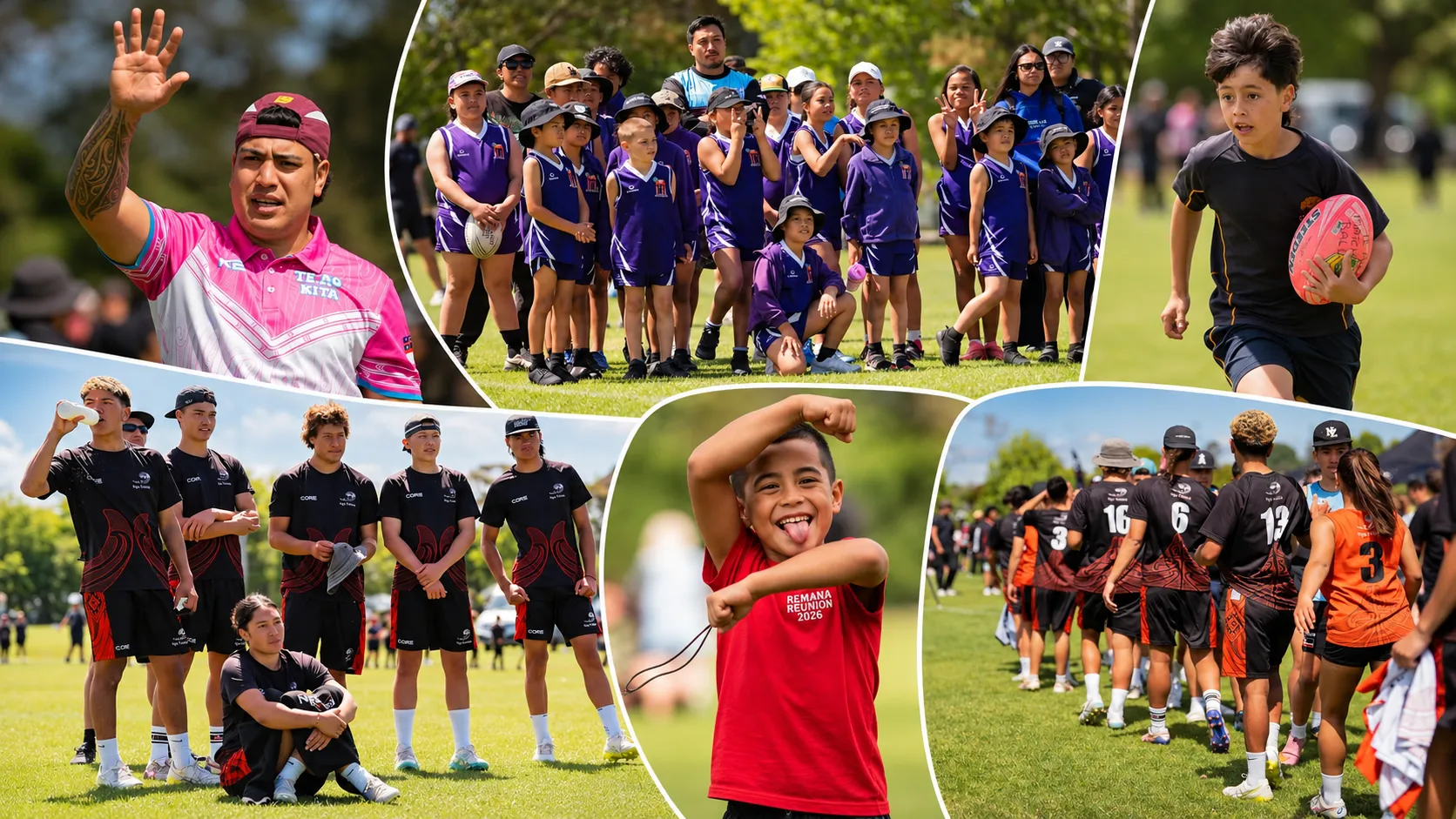
Te Ao KITA is changing that. On 22 October 2026, the Māori-led touch organisation brought over 500 tamariki and rangatahi to Parrs Park for a touch tournament played entirely in te reo Māori. Calls, coaching and refereeing were all in te reo, and many of the referees were rangatahi.
“Te reo Māori me ōna tikanga are the tūāpapa of Te Ao KITA so our rangatahi feel right at home, and they’re not afraid to give sport a go,” says Moe Lewin, co-founder of Te Ao KITA.
The tournament is part of a pathway Te Ao KITA has been building since 2023. Kaimahi from right across both Tuia Waitākere Community Sport & Recreation and Healthy Families Waitākere teams have been alongside, weaving their support around Te Ao KITA.
“Te Ao KITA knows what its whānau need. Our job is to listen to where they want to go and help them get there. That might be a funding application, connecting them with the right people, or supporting their coaches and rangatahi leaders to grow,” says Jemma Palmer, Youth Sport Advisor at Tuia Waitākere.
Much of that work goes into growing leaders. Through the Rangatahi Leadership Initiative, a tuakana–teina kaupapa, rangatahi who start as players step up. They help teina with drills, then referee, coach and mentor. Over the past season, Te Ao KITA’s rangatahi leadership group doubled from 9 to 18.
“Te Ao KITA has grown so quickly because our rangatahi know this space is theirs,” says Lewin. “They’re at the heart of everything we do. Our Pou Kaiāwhā (rangatahi leadership ohu) sit alongside us in our Kāhui Whakahaere, helping make decisions and shape the kaupapa.
“We’ve created pathways into coaching, kaiwawao and event management, giving our rangatahi opportunities to not only be involved, but to lead.
“The issue has never been a lack of potential; it’s been a lack of accessible opportunities for our rangatahi. We’re so proud of our kids!”
“Being part of this kaupapa has helped me level up my skills, in school, sport and te reo,” one rangatahi said.
Whānau are growing alongside them. Many parents are learning te reo through kupu hou for touch and playing next to their tamariki. “It makes me proud knowing our culture belongs here,” one parent said.
Regional sports trusts from across Tāmaki Makaurau helped run the day. Between games, Aktive ran a kēmu activation, introducing traditional games back into the lives of tamariki.
West Auckland now has a touch pathway where te reo Māori is the language of the game, from a first activation day to Māori Nationals, with more and more of it run by rangatahi.
“When sport is set up so tamariki can bring all of who they are, their reo included, they turn up, they stay, and they start to lead. Te Ao KITA is showing the whole sport system what wellbeing through sport and culture looks like. Our part, alongside Aktive and the other regional sports trusts across Tāmaki Makaurau, is to make room for it, and to keep learning,” says David George, Chief Executive of Tuia Waitākere (formerly Sport Waitākere).
“This isn’t just a sports day, it’s a family,” says one of Te Ao KITA’s Pou Kaiāwhā, who refereed on the day. “It’s a place to develop our knowledge about touch, and about being a ref. Some of us Pou Kaiāwhā also get the chance to coach the juniors and the seniors, so I really hope this initiative grows in the future.”
Jemma Palmer is Youth Sport Advisor at Tuia Waitākere, which supports community-led groups like Te Ao KITA to grow their own sport pathways through initiatives and programmes such as Coach Emerge, Coach Evolve, Coach Developer, Good Sports, Balance is Better and the Sport Pathways Framework. Parrs Park, where the tournament was held, is in Glen Eden, one of Tuia Waitākere’s Geographical Priority Communities.
Latest Articles