Rongomaiwhiti Rīki
Every tamaiti in Aotearoa should be able to walk up to their local sport club filled with excitement and anticipation about joining their local team – whatever language they dream in, whatever school they come from. Without wondering whether they’ll understand the referee, their teammates, or the cheers from the sideline. Just belonging. Confident and capable.
In Glen Eden, that’s what Rongomaiwhiti Rīki is working toward.
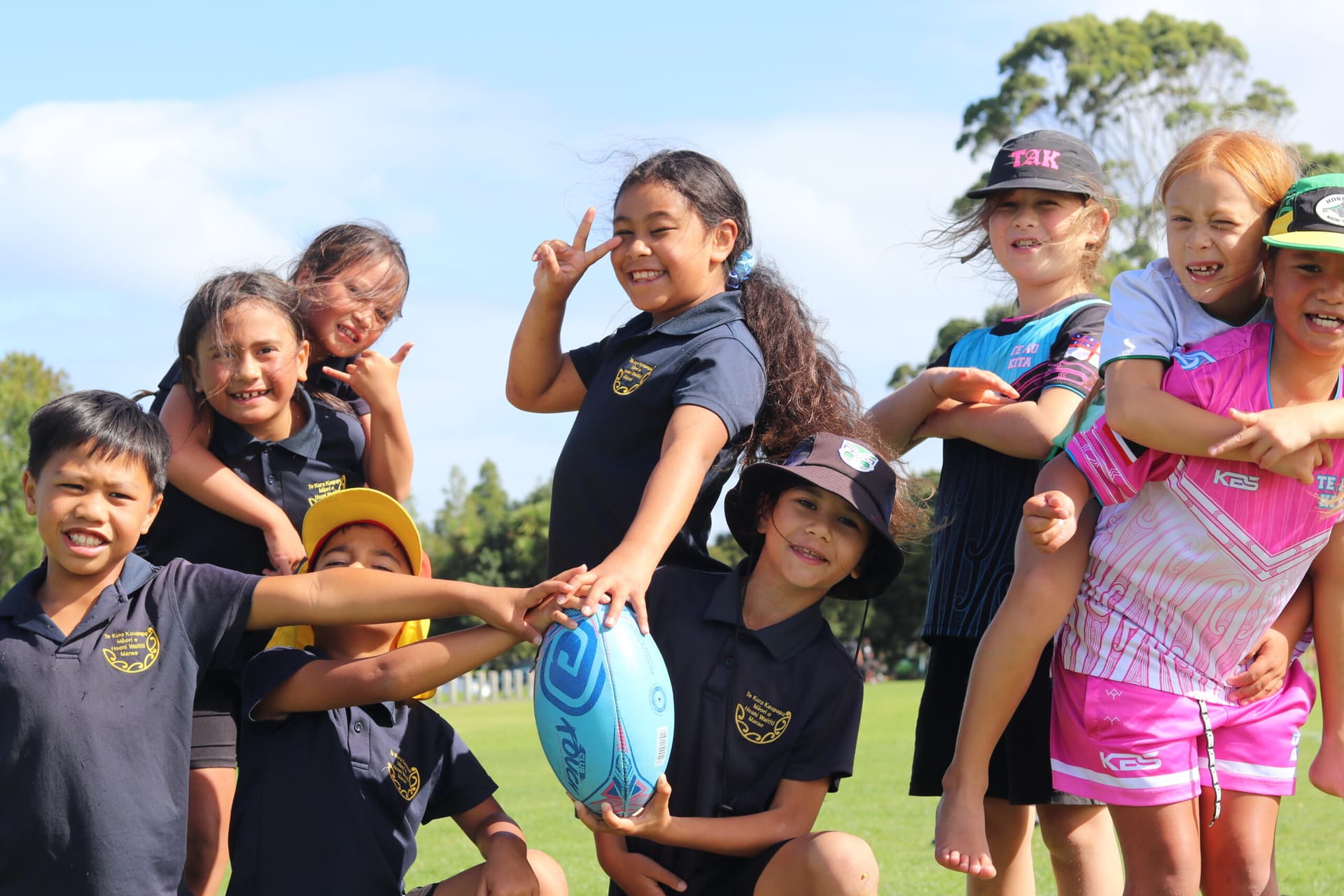
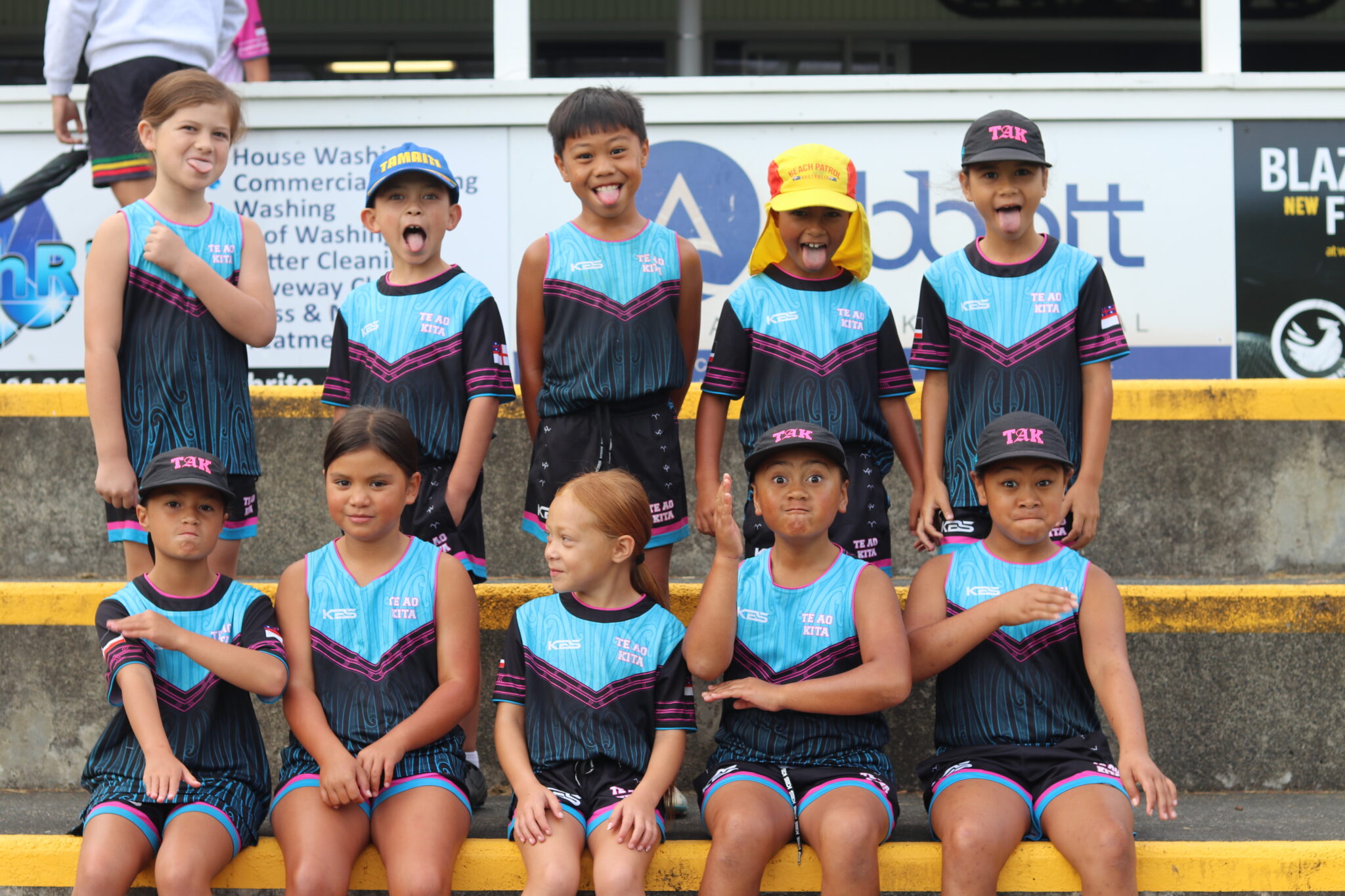
Named after Rongomaiwhiti – the atua of health and wellbeing – this six-week pilot is bringing 150 tamariki from Kura Kaupapa Māori o Hoani Waititi onto the field under the banner of the Glenora Bears rugby league club. Alongside them: five coaches from the kura, stepping into a mainstream club environment so that tamariki don’t have to step out of who they are.
For tamariki and rangatahi raised in rumaki reo, te reo Māori is not just a subject at school, it is how they move through the world. Khlani Paenga-Hayward, Māori Outcomes Lead in the Healthy Families Waitākere team at Tuia Waitākere, knows this firsthand. A former student of Hoani Waititi herself, she has seen the gap up close.
“Growing up through the kura, sport was something we loved – but stepping into mainstream club environments – the language, the culture, the way things were run was all a little bit foreign. That worry alone can be enough to stop our tamariki walking through the threshold of their local sports club doors. That’s what we’re working to change.”
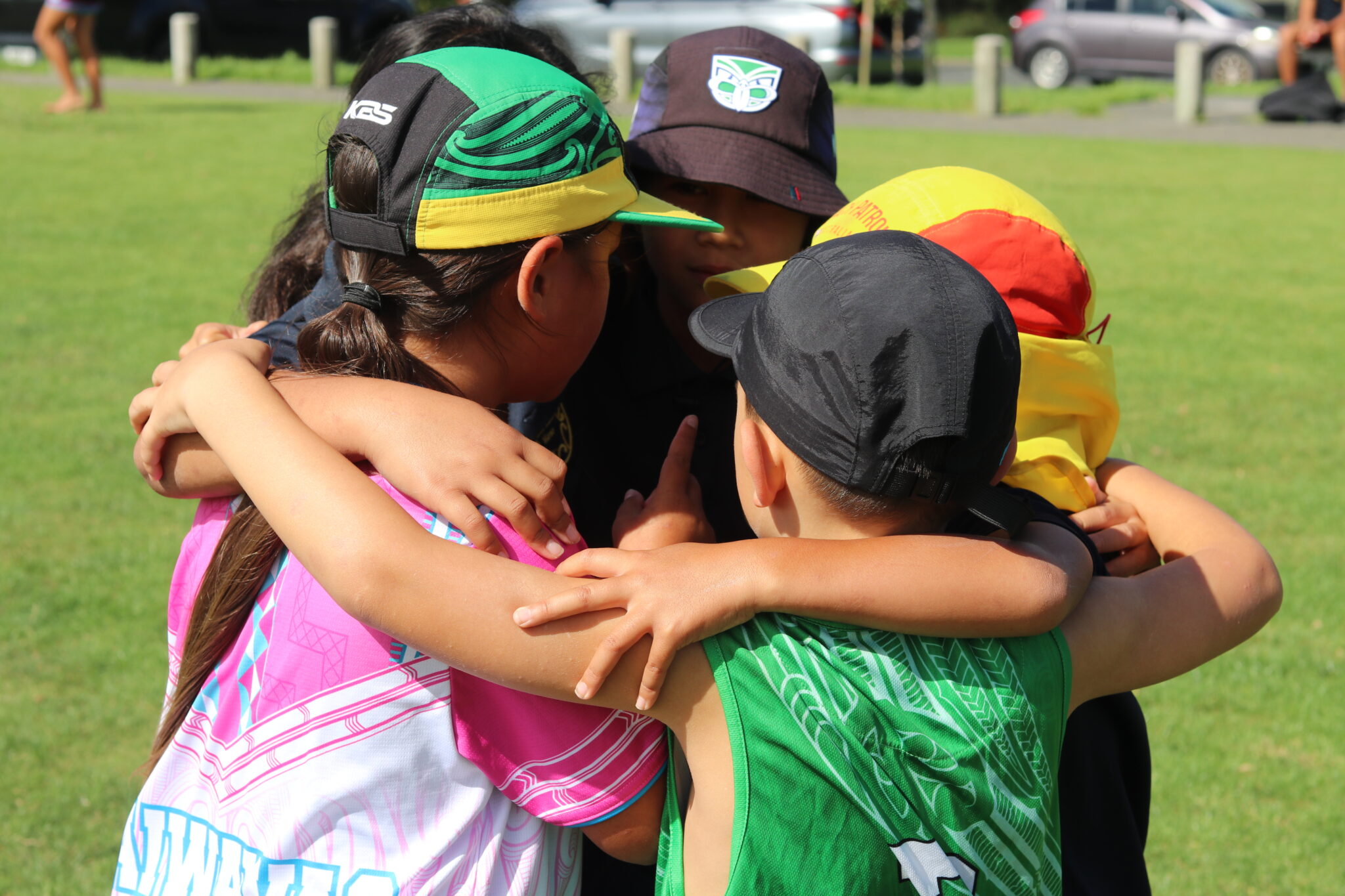
It is a gap that has existed for a long time, and one that Rongomaiwhiti Rīki is directly responding to. The kaupapa works in both directions. Coaches from the kura are supported to work in a mainstream club setting, while the Glenora Bears build the cultural capability to genuinely meet them. For the club, it’s a commitment they’ve made deliberately. Glenora Bears President Warren Clarke explains.
“We’re a community club – that’s always been who we are. Being a community club means making sure our doors are actually open to the whole community. Rongomaiwhiti Rīki is helping us to look at what we do and how we do it, and we’re better for it. Watching these tamariki on our field, in our jersey – that’s exactly what this club should look like.”
Tuia Waitākere is supporting both sides – Paenga-Hayward working alongside the kura through the Healthy Families Waitākere team, and Jemma Palmer, Youth Sports Advisor from the community sport and recreation team, working closely with the club.
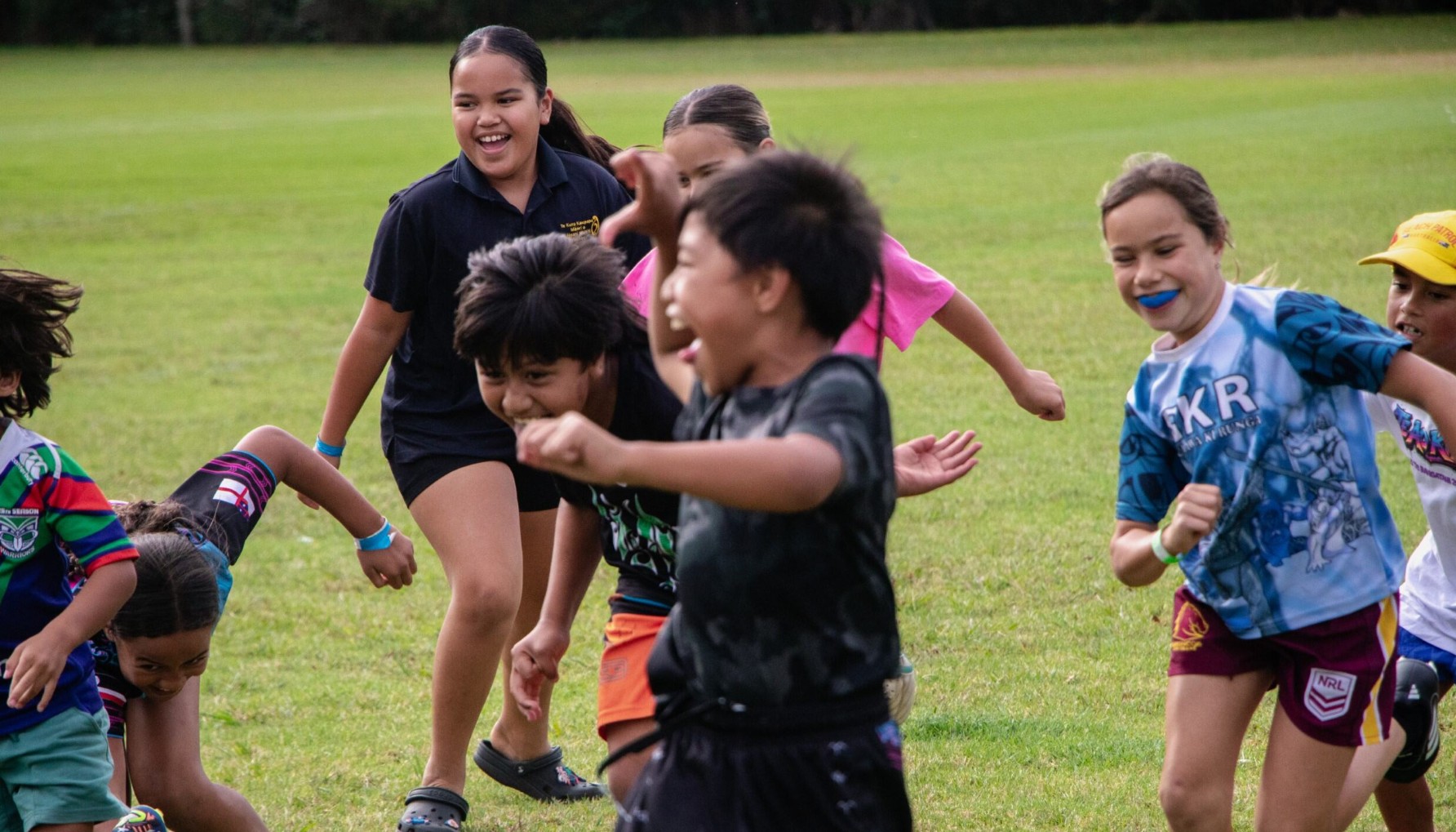
“I love playing league with my kura friends. My favourite part is when Matua Tuteauru speaks te reo Māori and all the coaching and communication is in te reo Māori. It makes me feel comfortable and confident.”
The ripple is already moving. A Glenora Bears parent – whose team now trains and plays alongside tamariki from the kura — recently approached Palmer wanting support with kupu Māori. Palmer explains.
“She wanted to learn more kupu Māori so she could encourage the players from the sideline — all of them. That, for me, is what this kaupapa is about. The culture isn’t just shifting on the field. It’s shifting on the sideline too.”
Rongomaiwhiti Rīki runs for six Saturdays. But the relationships being built between coaches, between whānau, between tamariki who now share a jersey — those are the sustained foundations. When the conditions are right, healthy habits take root early and last a lifetime. Paenga-Hayward continues.
“When our young people form healthy habits — like playing organised sport — early in life, we know these to be the building blocks of health and wellbeing for their entire life. It frames a way of moving through the world that stays with them. That’s what Rongomaiwhiti Rīki is here to nurture.”
Latest Articles
-1.png&w=1920&q=75)